
How to Get Court Records
The Yancey County Clerk of Superior Court keeps the case files for both Superior Court and District Court. An easy first stop is the North Carolina eCourts Portal. It offers a public Case Summary and any documents the Portal itself makes viewable. Want the whole eligible file, a copy, or a certified record? That takes the clerk counter or the public terminal in the courthouse. You can also pull a known case number through the Yancey County case search first. Then hand that number to the clerk with your request. That speeds things along.
- Identify the Yancey case number, caption if known, and the document, docket, judgment, audio, or transcript sought.
- Check Portal for the public Case Summary or qualifying filing, but do not treat that view as a certified record.
- Visit the clerk counter or ask for the courthouse public terminal to inspect eligible public material.
- Call (828) 678-5700 to confirm restriction, availability, fee, and whether the clerk can fulfill the particular request by mail.
- State whether a plain copy, certificate under seal, or other official form of copy is needed, then use the payment method the clerk confirms.
The clerk does not publish a local web form for ordering copies. No official Yancey turnaround time is posted either. Mail orders are documented to work. Send a money order or certified check payable to the Yancey County Clerk of Superior Court. Before mailing a multi-page request, call the clerk. Confirm the method and how delivery will be made.
Yancey Court Record Channels
Yancey County court records travel through more than one door. The statewide portal opens official indexes and qualifying filings over the Internet. At the courthouse, staff at the counter can pull an eligible local file, and a public self-service terminal lets you search criminal, civil, estate, and special-proceeding information yourself. For an older paper file, a record that will not display online, or anything needing certification, the clerk's phone line is the practical check. Administrative Judicial Branch records go through a separate NCAOC public-record process, and that route does not replace the Yancey case file held by the clerk.
The Judicial Branch's court-records guidance spells out how terminal access works, how to arrange file inspection, and how a clerk-held file differs from other record requests.
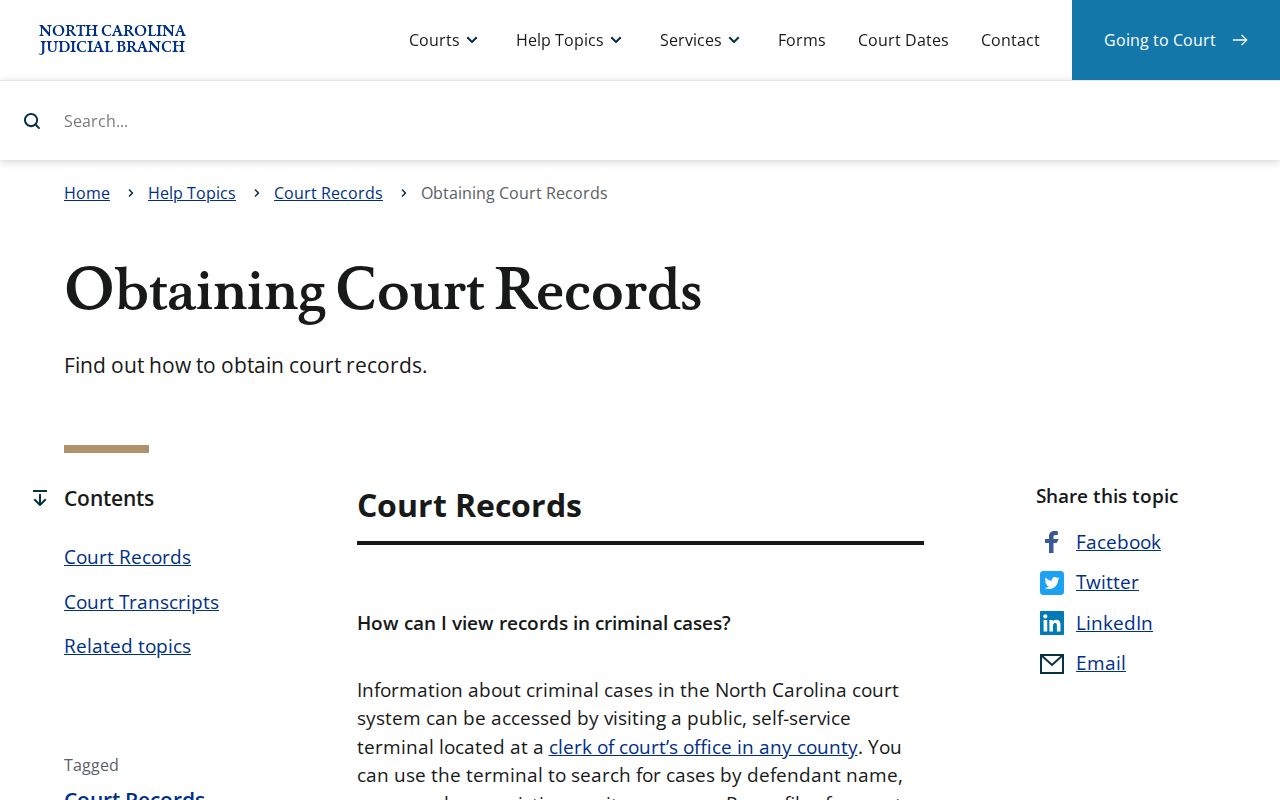
The terminal earns its keep when a Yancey court record calls for a deeper local search than the public Portal view can give you. Note: No official terminal floor map is published, so ask the Yancey clerk where the current terminal sits.
Types of Court Records
A court record is not one fixed document. The Yancey clerk maintains the local case file and its docket history. Coverage spans criminal, civil, domestic, estates, special proceedings, small claims, traffic, infractions, and clerk matters. Portal adds an index layer. It works through the Case Summary or Register of Actions, arranged in chronological order. Filed papers sit deeper still. Clerk-authenticated copies form yet another layer of a Yancey court record. Knowing which layer you need saves time at the counter.
- Case Summary or Register of Actions, with public chronology and case sections.
- Filed complaints, motions, orders, judgments, and other eligible case papers.
- Criminal and infraction records from District Court or Superior Court matters.
- Civil, estate, and nonconfidential special-proceeding records.
- Available audio or transcripts, which are requested through a separate route.
Yancey Court Record Layers
Three different things all get called a record. A Portal Case Summary is a public index with a chronology. A filed document is the real complaint, motion, order, or judgment. It is viewable online only when public and posted. Otherwise, go through the clerk. A certified copy is the clerk's authenticated official version. For local case documents, the Yancey County Clerk of Superior Court does the certifying, not NCAOC. The difference matters when a Yancey result shows an event like "order entered." That entry describes activity in the record. It does not hand you the signed order itself. Downloading a screen view from Portal makes it no more official than it was on the screen. Note: A Portal event names court activity. But only the signed document behind it counts as the paper itself.
What a Court Record Contains
Public Yancey case information can cover a lot of ground. Expect a case number and the court assignment. Role-labeled parties, an event chronology, hearings, disposition, and any applicable financial information round it out. Civil configurations can add causes of action. What a full file contains depends on the case and the access rules that govern it. A sealed attachment stays private. So does a juvenile item or a sensitive field. This holds no matter how public the case index looks.
| Case number | The Enterprise Justice identifier, such as 21CR000003-910, for a specific Yancey case. |
|---|---|
| Case Summary | Chronological events and the public case-information sections in Portal. |
| Filed documents | Eligible public pleadings, motions, orders, or judgments in the local case file. |
| Hearings and disposition | Entered court-setting and outcome information where applicable. |
| Financial information | Public obligation fields when the case type and access status permit display. |
| Audio or transcript | A separate record request, not a docket entry or a guaranteed recording. |
Yancey Clerk Record Requests
A focused request gets better results at the Yancey clerk's counter. Include the case number and a description of the document. Add the case caption if you know it. Note whether you want certification, and give your contact or delivery details. Older, paper-based, restricted, or Portal-invisible files deserve a question first. Ask the clerk whether the file can be inspected. Ask, too, whether copies are available before you pay. The county promises no email delivery, mail delivery, or same-day service. Visit the clerk counter in Room 5 at the Yancey County Courthouse, 110 Towne Square, Burnsville, NC 28714. This one office holds records for both trial divisions. It is not a separate county records department.
Certified Copies and Fees
A plain copy simply reproduces an eligible court document. A certificate under seal is the clerk's certification. An exemplification is a step further in formal record certification. Yancey follows the statewide statutory clerk schedule for fees. No flat "docket sheet" fee appears in that schedule. So the exact request shapes the cost. Say whether you want a copy of a Case Summary, individual documents, or a certified record. The clerk can price it correctly from that.
| Yancey clerk service | Amount | Qualification |
|---|---|---|
| Clerk-prepared copy, first page of each document | $2.00 | G.S. 7A-308(a)(12). |
| Each additional page or fraction | $0.25 | Same statutory schedule. |
| Certificate under seal | $3.00 | Certification component under G.S. 7A-308(a)(9). |
| Exemplification of records | $10.00 | Further formal certification under G.S. 7A-308(a)(10). |
| Certified criminal record search | $25.00 | Single-county AOC-CR-314 search, not a statewide search. |
| Audio CD | Actual cost | Only if a recording is available. |
Yancey County Clerk of Superior Court
Yancey County Courthouse, Room 5
110 Towne Square, Burnsville, NC 28714
(828) 678-5700
Yancey Certified Record Limits
The Portal can show you public case information, but certification is another matter. Only the local clerk can certify a Yancey court case document. NCAOC states plainly that it does not hold county case documents. It cannot certify them either. Want an official criminal search? The published form is AOC-CR-314, the Request for Certified Criminal Record Search. That form asks the clerk to search official criminal-case records in the named county. The clerk then certifies the results. It differs from simply ordering a copy of a file you already know about.
A Yancey certified criminal search costs $25, paid to the clerk. Mail requests take a money order or certified check. In person you can pay with cash, card, money order, or certified check. Personal checks are not accepted. Note: the search covers only the named county. It is not a statewide court record search.
Public Access and Sealed Records
Most Yancey court files, dockets, and indexes are open to the public. A law or court order can say otherwise. Openness is not all or nothing, though. Juvenile records carry their own rules. So do sealed material, expunged records, protected family or mental-health content, and personal identifying details. Seeing a case in the public Portal index does not make every document or attachment viewable. And filing a copy request never converts restricted material into a public record.
North Carolina access rules: G.S. 7A-109 requires clerks to keep records, files, dockets, and indexes, and makes them open to public inspection except where law prohibits access. G.S. 132-6.2 governs copy media and certification principles, while court-specific statutory fees still apply.
The state’s juvenile confidentiality statute is one example of a legal limit on inspection.
The text of G.S. 7A-109 is the official public-inspection baseline for the Yancey clerk’s court-record duties.
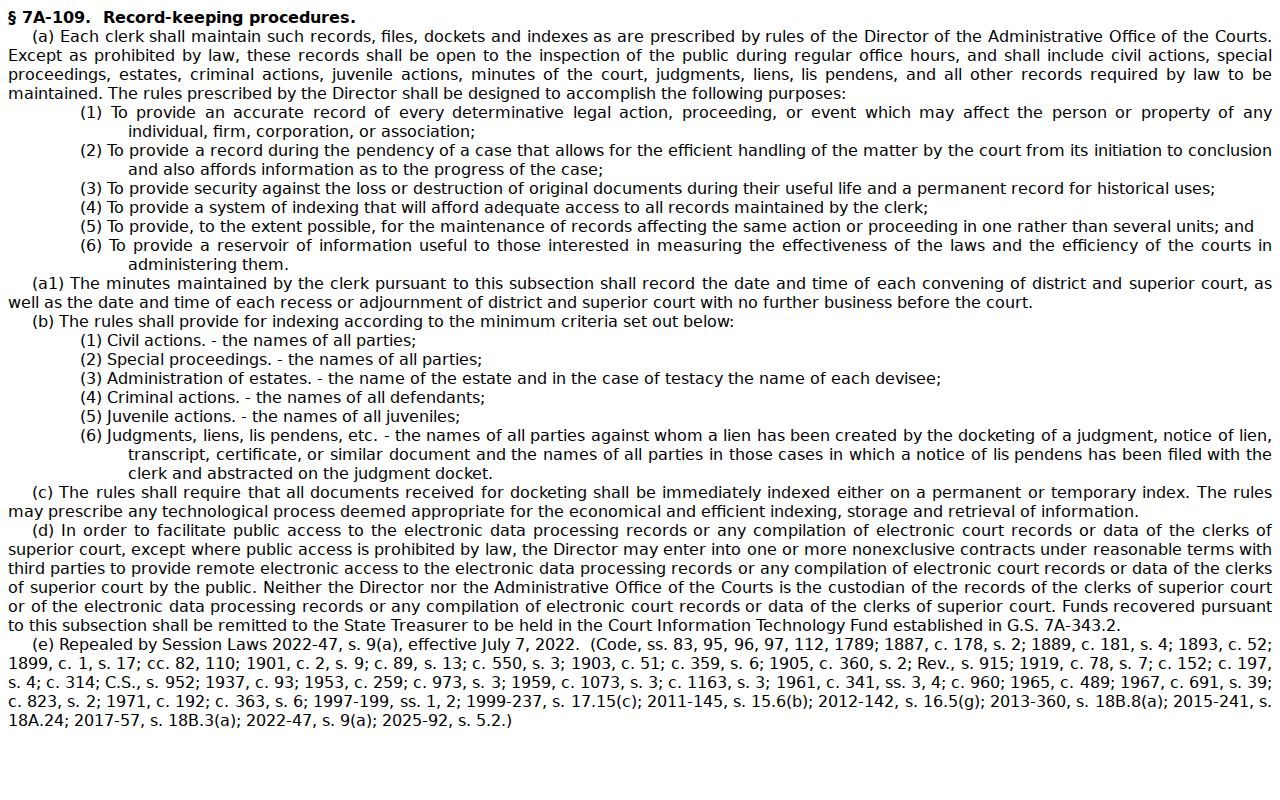
The statute frames access through the clerk-held Yancey court record, keeping its legal exceptions intact.
Yancey Record Payment Rules
Paying by mail for a Yancey record? Use a money order or certified check made out to "Yancey County Clerk of Superior Court." Send it to Room 5 at 110 Town Square, Burnsville, NC 28714. Never mail cash or a personal check. The courthouse Cashier's Office is more flexible. Cash, credit and debit cards, money orders, and certified checks all work there. Card payments carry processing fees. The published brands are Mastercard, Visa, American Express, and Discover.
Payment rules say nothing about whether a record is public or even available. Before you send money on an uncertain request, confirm a few things with the Yancey clerk. Check the document, the fee, any certification need, and the delivery method. Note: no published Yancey fee covers every requested record. A full-file total has to be worked out document by document.
Yancey Audio Court Records
Audio and transcripts are not ordinary docket entries. A court reporter sets transcript rates independently. An audio CD that exists is charged at actual cost. The state publishes no fixed amount. Most criminal District Court proceedings go unrecorded unless someone orders them. The state treats pleas in H/I felonies as an exception, though. So an audio request needs a case, a proceeding date, and the court location. It also needs an availability check with the clerk.
The form to use is AOC-G-114, the Request For Audio Recording. It asks for the county and the trial division. It also wants the case name or file number, the proceeding date, and the presiding judge or clerk. Add the courtroom and your own details. Filing it does not create a right to a confidential recording. Nor does it create a right to a court-reporter audio file.
Yancey eCourts Record Change
Yancey joined eCourts in July 2025. That brought Portal and Enterprise Justice. The local clerk stayed custodian of the court file. An older Yancey paper record may now carry a new case number. The new number has four parts after the conversion. No source shows how far back every local file was digitized. For pre-eCourts material, ask the clerk directly. Ask whether the Yancey file is available for terminal review or copying.
The transition changed the public search channel, nothing more. The line between a Portal view and a clerk-certified court record still holds.
Yancey Federal Court Records
A federal case will never show up in Portal. It is not a Yancey state court record. Yancey County sits in the Asheville Division. That division belongs to the U.S. District Court for the Western District of North Carolina. Federal civil and criminal dockets run through PACER. Federal bankruptcy records follow a separate bankruptcy court system. Check which court is named on your paper. Do that before starting any request with the Yancey clerk. The Western District of North Carolina court's own site covers cases that live outside the Yancey state-court file.
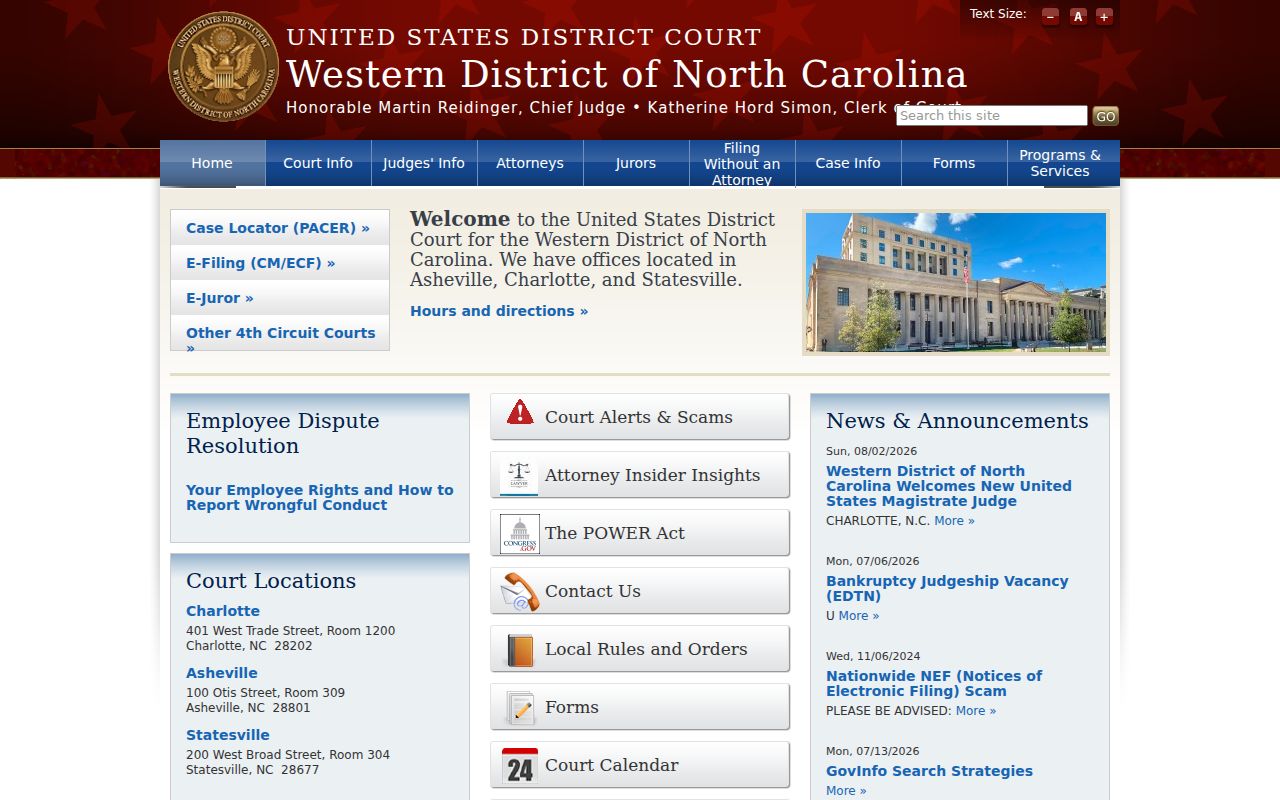
The federal court's site helps you tell a federal docket apart from the clerk-held Yancey court record. For documents themselves, PACER serves as the federal judiciary's docket and document service.
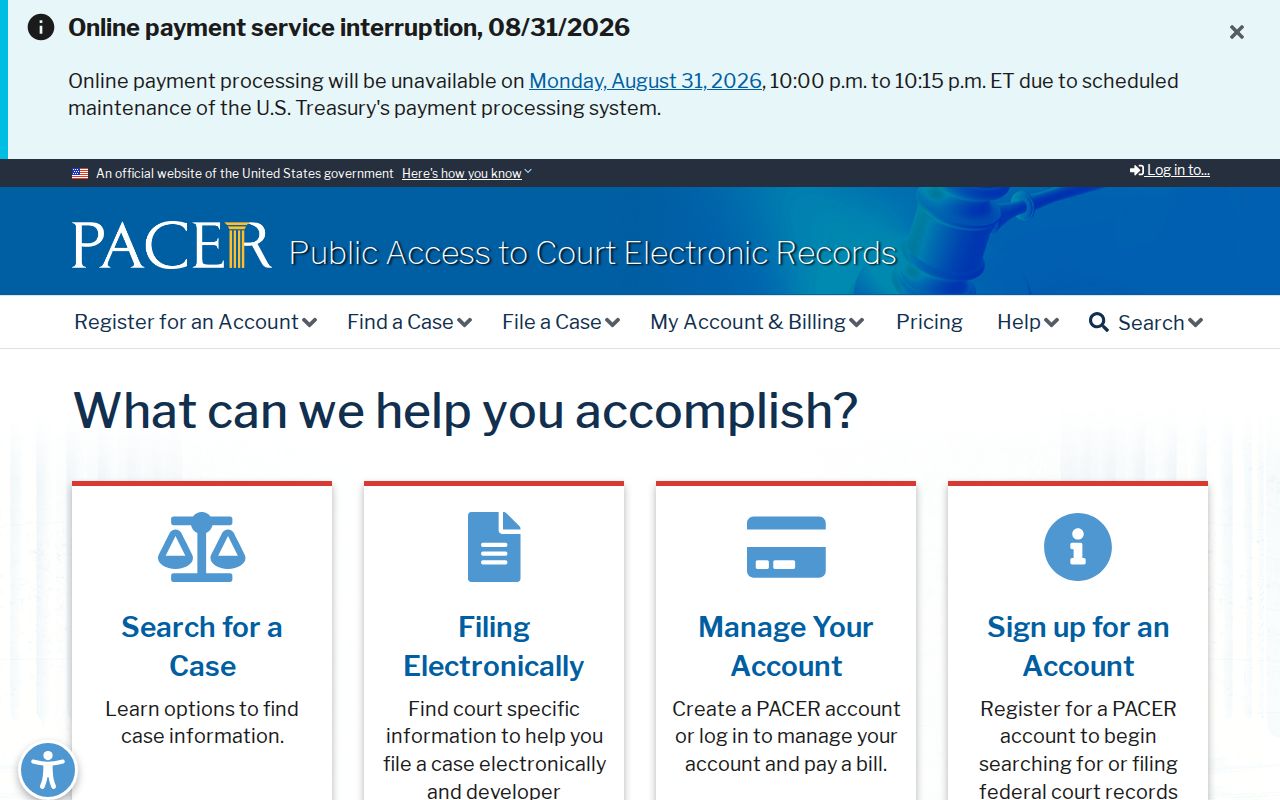
PACER is a separate federal channel. It replaces neither Portal nor the Yancey clerk. Bankruptcy is separate too, and the Western District of North Carolina Bankruptcy Court runs its own venue and electronic case system.
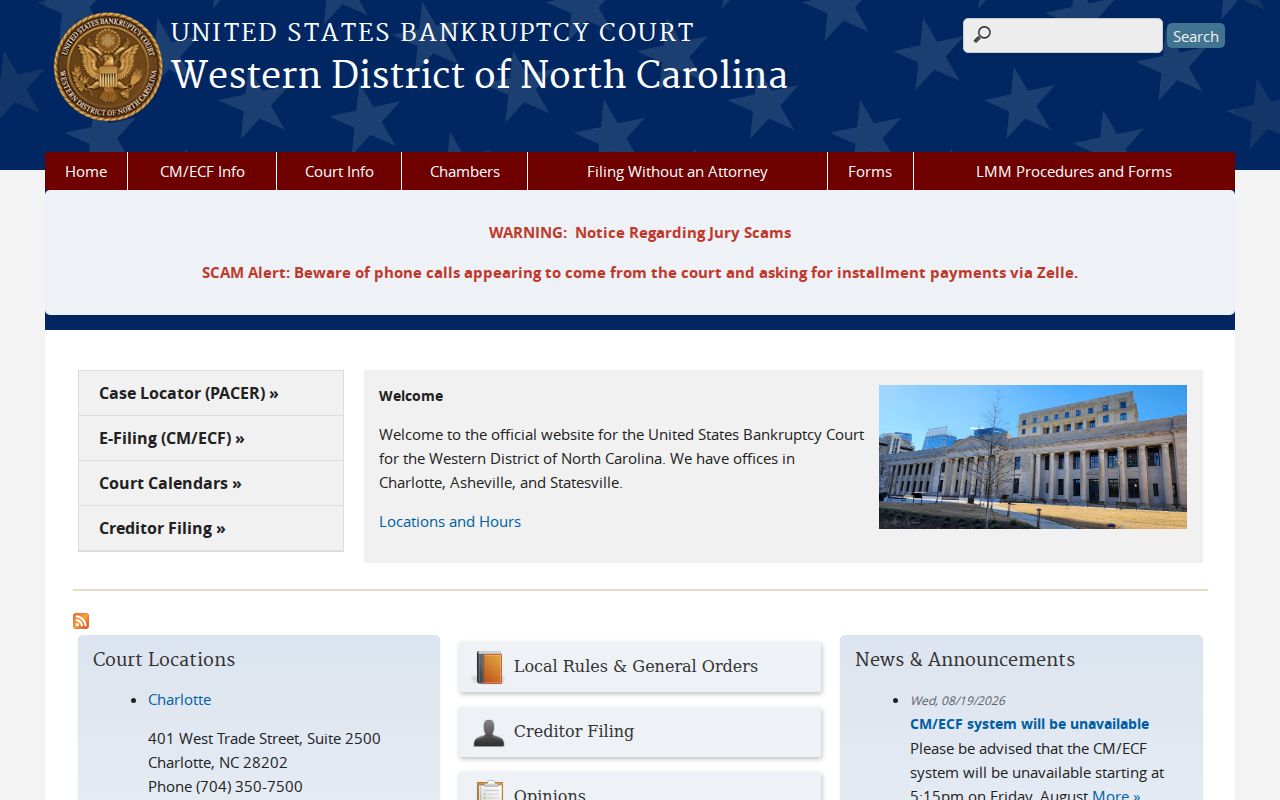
A bankruptcy record moves through that federal court's channels, not the Yancey County Clerk of Superior Court file.